
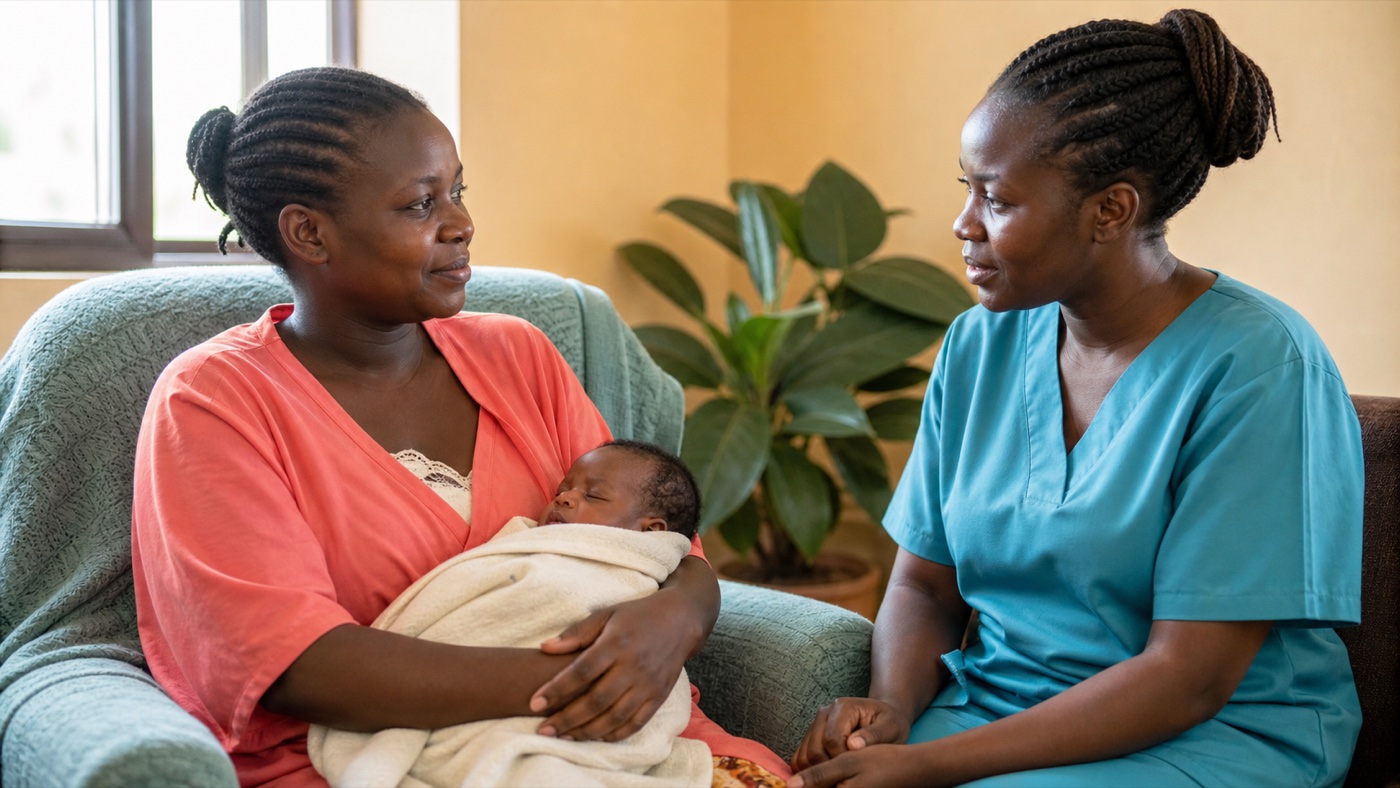
The postpartum period brings rapid physical, hormonal and emotional changes. Support and follow-up should continue after birth.
What to know
Bleeding, uterine cramps, breast changes, tiredness and perineal or incision discomfort can occur. Recovery depends on the birth and individual health.
Mood changes are common, but persistent sadness, severe anxiety, confusion or thoughts of harm require prompt professional support.
Key points
Allow healing timeFollow wound, pelvic-floor and activity advice.
Monitor bleedingKnow the warning signs for heavy or worsening bleeding.
Protect mental healthTell someone early if mood or anxiety concerns persist.
Attend postnatal careUse follow-up to discuss recovery and family planning.
Signs and symptoms
Recovery includes physical healing, feeding changes, sleep disruption and emotional adjustment. Symptoms should gradually improve, not simply be endured.
Bleeding and cramps
Lochia changes from red to lighter discharge over time. Uterine cramps may be stronger during breastfeeding.
Perineal or incision discomfort
Soreness, swelling, stitches or caesarean-wound pain should improve; worsening pain, redness, opening or discharge needs review.
Breast and feeding changes
Fullness and nipple tenderness can occur. A hot painful area with fever may indicate mastitis.
Mood and sleep
Brief tearfulness can occur, but persistent low mood, severe anxiety, detachment, confusion or thoughts of harm need prompt help.
Causes and contributing factors
Postpartum changes reflect uterine recovery, tissue healing, hormonal shifts, blood-volume changes, feeding and the demands of caring for a newborn.
Birth-related healingVaginal birth, tears, assisted birth or caesarean delivery create different recovery needs.
Pregnancy complicationsHypertension, diabetes, anaemia, infection or blood clots can persist or first appear after birth.
Feeding and hormonesMilk production and falling pregnancy hormones affect breasts, bleeding, vaginal dryness and mood.
Social conditionsSleep loss, limited support, financial stress, trauma and violence can affect recovery and mental health.
How healthcare professionals assess it
Assessment is individual. Not every person needs every test, and results must be interpreted alongside symptoms, history and examination findings.
Early postnatal checks
Care includes bleeding, blood pressure, temperature, pain, wounds, urination, bowel function, feeding and emotional wellbeing.
Ongoing contacts
WHO recommends postnatal care contacts beyond the first day so recovery and newborn health can be reassessed.
Targeted testing
Blood counts, urine tests, imaging or other tests may be used for heavy bleeding, infection, hypertension or clot concerns.
Mental-health assessment
Clinicians may screen for depression, anxiety, trauma, psychosis and safety concerns.
Treatment and management
Postnatal care should support recovery, feeding choices, sleep, contraception, chronic conditions and the transition to parenting.
Pain and wound care
Use prescribed pain relief, hygiene and wound instructions; report increasing pain, redness, swelling or discharge.
Bleeding and anaemia
Heavy bleeding is an emergency. Iron or other treatment may be needed when anaemia is confirmed.
Feeding support
Skilled help can address latch, milk supply, pain, formula use or mixed feeding without judgement.
Emotional care
Counselling, practical support and medication may be used; postpartum psychosis requires emergency care.
Practical steps you can take
Accept help with meals, household tasks and rest where possible.
Follow lifting, driving, wound, pelvic-floor and return-to-exercise advice based on your birth.
Track blood pressure if advised after hypertensive pregnancy.
Discuss contraception before resuming sex; ovulation can return before the first period.
Keep postnatal appointments even when the baby appears well.
Questions to ask at an appointment
Writing questions down can make a consultation more useful, especially when symptoms are stressful or complex.
- Is my bleeding, pain and wound healing progressing as expected?
- What symptoms of infection, hypertension or a blood clot should I watch for?
- What feeding support is available if feeding is painful or stressful?
- When can I safely exercise, drive, have sex and return to work?
Common questions
How long does recovery take?
There is no single timeline. Some changes improve over weeks, while pelvic-floor, surgical, emotional or feeding concerns may need longer support.
Can pregnancy happen before periods return?
Yes. Ovulation can occur before the first postpartum period, including during breastfeeding.
Which symptoms are emergencies?
Heavy bleeding, chest pain, breathing difficulty, seizures, fainting, severe headache with visual symptoms, or thoughts of harming yourself or the baby need urgent help.
When to speak with a healthcare professional
Arrange an assessment if symptoms concern you, affect daily life, persist, worsen or are different from what is normal for you.
Heavy bleeding, chest pain, breathing difficulty, seizures or faintingContact a qualified healthcare professional for individual assessment.
Fever, worsening pain or wound concernsContact a qualified healthcare professional for individual assessment.
Thoughts of harming yourself or the babyContact a qualified healthcare professional for individual assessment.
This guide is educational. It does not diagnose a condition or replace care from a qualified healthcare professional.
Medical references
This guide was prepared from authoritative public-health and professional medical resources.
Have questions about this topic?
Discuss your symptoms, history and next steps privately with Dr. Benny.