
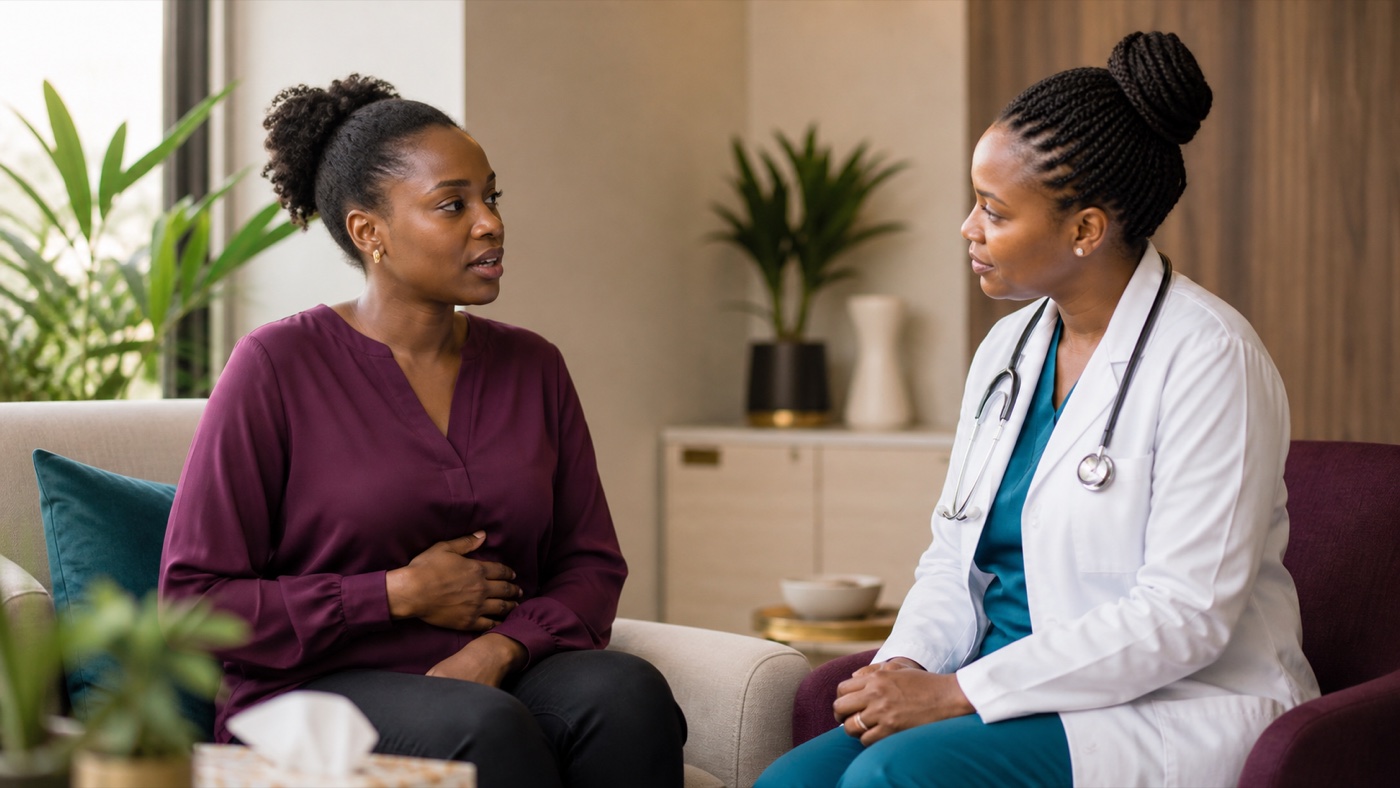
Endometriosis occurs when tissue similar to the lining of the uterus grows outside the uterus, causing inflammation and sometimes scar tissue.
What to know
Symptoms can include severe period pain, chronic pelvic pain, pain during sex, bowel or urinary pain around periods, heavy bleeding and fertility difficulty.
Symptoms vary widely and do not always match the extent of disease. Assessment may involve history, examination and imaging; management is individual.
Key points
Pain patterns matterTrack when pain occurs and how it affects daily life.
Periods may be difficultHeavy bleeding or severe cramps can occur.
Other organs may be affectedBowel, bladder or sexual pain may occur.
Fertility can be affectedNot everyone with endometriosis has infertility.
Signs and symptoms
Endometriosis symptoms range from mild to disabling, and symptom severity does not reliably show how extensive the disease is.
Period and pelvic pain
Pain may begin before bleeding, continue through a period or become chronic between periods.
Pain with sex
Deep pain during or after penetration can occur.
Bowel or bladder symptoms
Painful bowel movements, painful urination, bloating, diarrhoea or constipation may worsen around periods.
Fertility and fatigue
Some people first learn about possible endometriosis during fertility assessment. Persistent fatigue and emotional distress are also common.
Causes and contributing factors
Endometriosis involves tissue similar to the uterine lining growing outside the uterus. The exact cause remains uncertain.
Inflammation and scarringLesions can trigger inflammation, adhesions and altered pelvic anatomy.
Hormonal influenceEndometriosis tissue responds to hormones, although symptoms may continue outside menstruation.
Multiple risk pathwaysGenetic, immune, cellular and anatomical mechanisms are being studied; no single behaviour causes the condition.
Not caused by poor hygieneEndometriosis is not an infection and is not caused by sexual activity or personal choices.
How healthcare professionals assess it
Assessment is individual. Not every person needs every test, and results must be interpreted alongside symptoms, history and examination findings.
Detailed pain history
Timing, location, severity, bleeding, bowel or bladder symptoms, sexual pain and fertility goals are important.
Examination
A pelvic examination may identify tenderness or nodules but can also be normal.
Imaging
Ultrasound and sometimes MRI can identify endometriomas or deep disease, but normal imaging does not exclude all endometriosis.
Surgical assessment
Laparoscopy may diagnose and treat disease in selected cases; it is not automatically the first step for everyone.
Treatment and management
Care aims to reduce pain, support daily function and address fertility goals. Treatment choices may change over time.
Pain medicines
Appropriate anti-inflammatory or other pain medicines may help, with attention to side effects and contraindications.
Hormonal suppression
Combined hormonal contraception, progestogens or other hormonal treatments may reduce symptoms when pregnancy is not being attempted.
Surgery
Selected people may benefit from surgery to remove lesions or restore anatomy; symptoms can recur and risks should be discussed.
Fertility care
Trying naturally, surgery, ovulation treatment or assisted reproduction may be considered based on age, anatomy and other factors.
Practical steps you can take
Record pain, bleeding, bowel, bladder and sexual symptoms and their effect on work, sleep and relationships.
Use heat, pacing and gentle movement if helpful, while seeking care for disabling pain.
Discuss pelvic-floor physiotherapy or multidisciplinary pain care where available.
Explain fertility goals early because they affect treatment choice.
Seek emotional support; chronic pain and delayed diagnosis can be psychologically exhausting.
Questions to ask at an appointment
Writing questions down can make a consultation more useful, especially when symptoms are stressful or complex.
- Could my symptom pattern fit endometriosis or another pelvic condition?
- What can imaging show, and what can it miss?
- How might each treatment affect bleeding, pain, fertility and side effects?
- When would surgery or referral to an endometriosis specialist be appropriate?
Common questions
Can a normal ultrasound rule out endometriosis?
No. Ultrasound can detect some forms, especially endometriomas or deep disease, but superficial disease may not be visible.
Is hysterectomy a guaranteed cure?
No. Endometriosis exists outside the uterus, and pain may have more than one contributor. Major surgery requires individual counselling.
Can pregnancy cure endometriosis?
No. Symptoms may change during pregnancy, but pregnancy is not a treatment or cure.
When to speak with a healthcare professional
Arrange an assessment if symptoms concern you, affect daily life, persist, worsen or are different from what is normal for you.
Period or pelvic pain interferes with school, work or sleepContact a qualified healthcare professional for individual assessment.
Pain during sex, bowel movements or urination persistsContact a qualified healthcare professional for individual assessment.
You have fertility concerns or very heavy bleedingContact a qualified healthcare professional for individual assessment.
This guide is educational. It does not diagnose a condition or replace care from a qualified healthcare professional.
Medical references
This guide was prepared from authoritative public-health and professional medical resources.
Have questions about this topic?
Discuss your symptoms, history and next steps privately with Dr. Benny.